We analyze every peer-reviewed monolaurin study so you don't have to. Clear answers backed by real evidence.
You've been consuming monolaurin your whole life — first through breast milk as an infant, then through coconut oil in food. It's a simple fat: glycerol bonded to lauric acid, a 12-carbon chain. Nothing exotic.
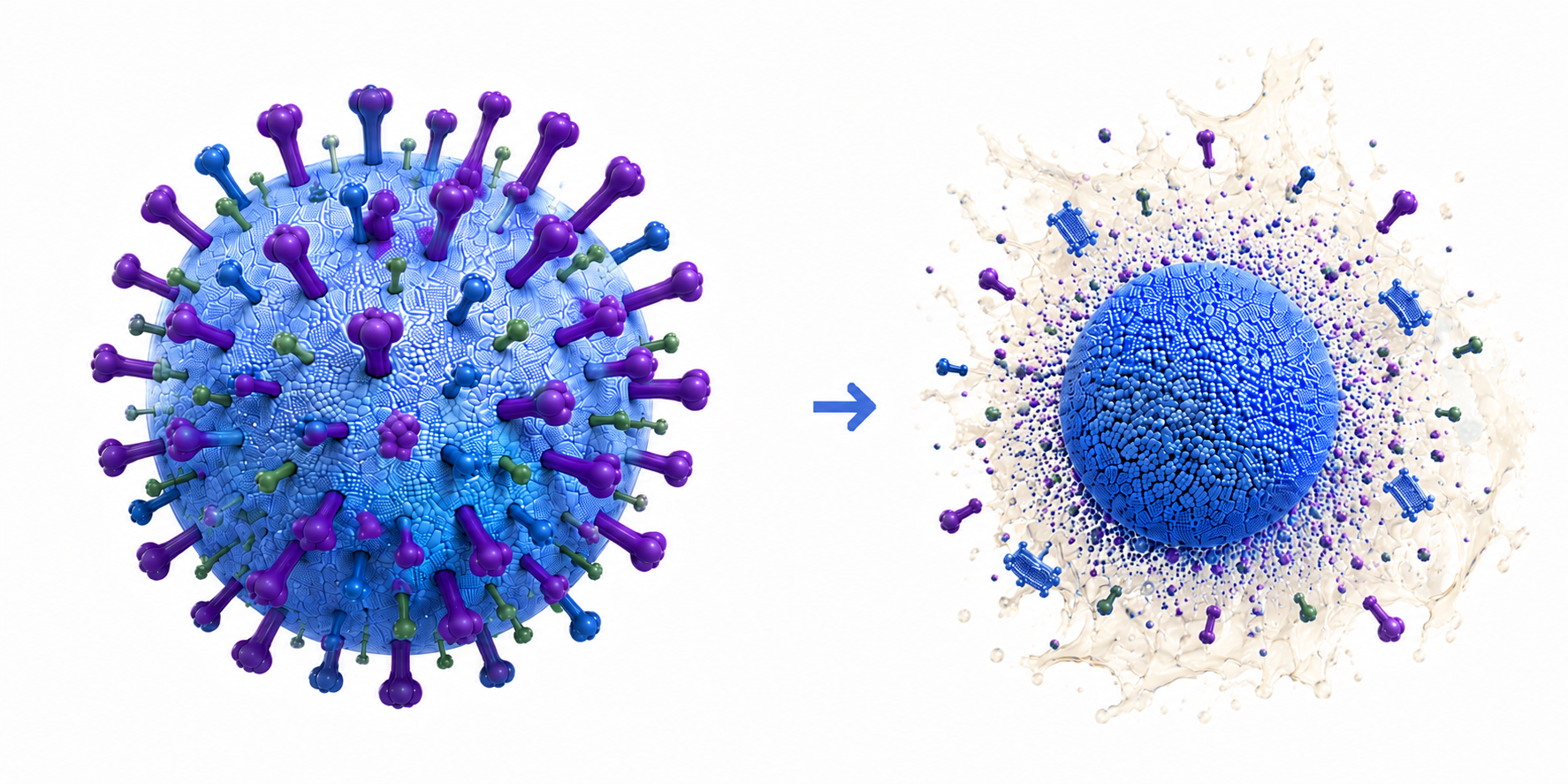
What caught researchers' attention in the 1960s is what it does in the lab. Monolaurin dissolves the protective membranes around certain bacteria and viruses, essentially popping them like soap bubbles. It turns out nature was already using this trick — it's one of the compounds that helps protect newborns through breast milk.
403 peer-reviewed studies from PubMed, graded by quality and study type
Each fact is checked against the original source text by an independent review process
Plain-English summaries with evidence ratings so you know what's proven and what's not
Based on the current body of research — mostly in vitro and animal studies
Monolaurin dissolves the lipid envelope surrounding certain bacteria and viruses, essentially destroying their protective shell.
It interferes with how bacteria communicate and produce toxins, effectively silencing their virulence machinery.
Emerging evidence suggests monolaurin may influence T-cell activity and gut microbiota balance, though human data is limited.
Synthesized from five high-quality primary research papers. Every claim traced to a PubMed ID. Includes what the evidence does — and doesn't — support.
Real questions, answered with real evidence
Strong lab evidence for gram-positive bacteria. Less clear for gram-negative. Here's what 48 studies show.
Animal studies show real promise for enveloped viruses. Human clinical trials? Still waiting.
Your body converts lauric acid to monolaurin, but the conversion rate is poorly understood. Not a simple swap.
From coconut oil to purified supplements to topical gels — different forms, different evidence. Here's what the research covers.
Dissolves lipid membranes of enveloped pathogens and disrupts bacterial signal transduction.
It's a key antimicrobial component. One study calls it the "primary" antimicrobial factor protecting newborns.